
♪DJ
30 de septiembre de 2026
5 minutos lectura
BENALES Interview: Peace, unity and respect. It is the very essence of the movement
Comparte:
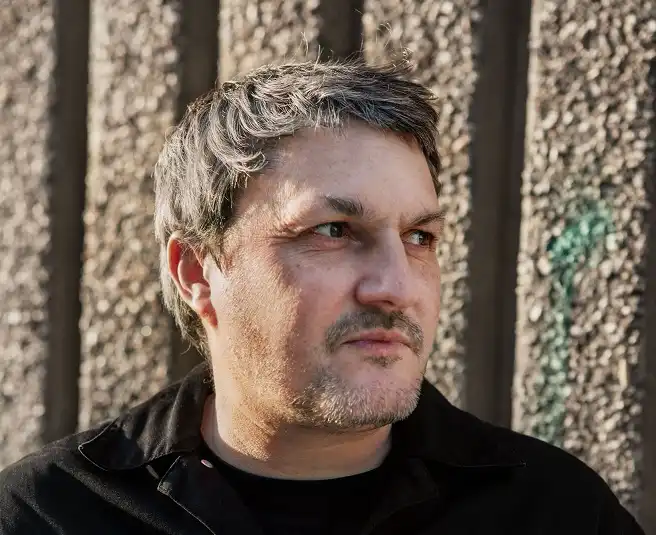
A vinyl collector since he was 14 and a sensation as a DJ and producer on the underground techno scene since the late 90s. Benales is a regular record spinner in European clubs, consolidating his status as a respected figure in the electronic community, as his powerful and unforgettable sessions are already well known.
We spoke with one of the protagonists of the launch of Freedom Festival this October 17, alongside the stellar lineup featuring Zadig, Hadone, and Indómita.
- What do you remember most about your first visit to Colombia? Tell us about your experience and about the perception you have developed of our scene.
It was my first time in Colombia, and I have to say it ranks among my best experiences as a DJ over the years. I was truly amazed by the welcome and generosity of the people here; the crowd is incredible—so receptive—and you can really feel the passion for the music.
- You’ve been buying records since the mid-1990s. Tell us about your record library, and walk us through your process for selecting, purchasing, transporting, and organizing your collection.
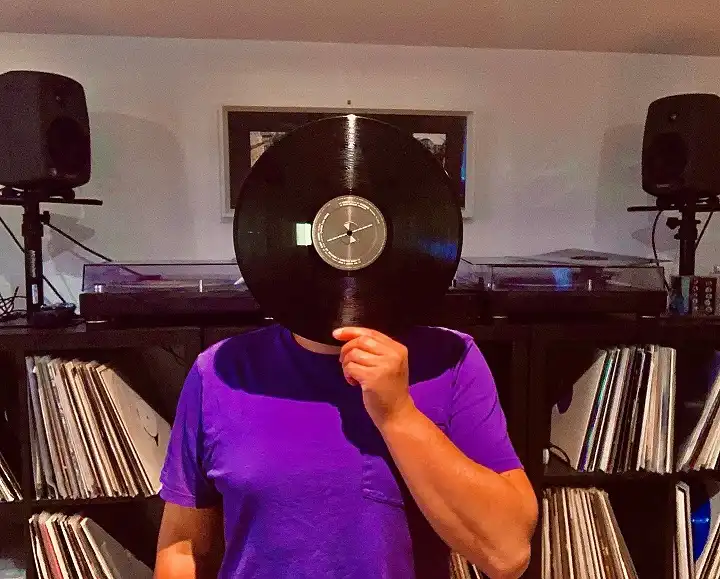
I’ve actually been buying records since I was 14 or 15, and my collection numbers a few thousand records; as for organization, I mainly sort them by genre, subgenre. I bought these records primarily at local record shops in France and across Europe—and a great many in England, too, since my hometown was in the north of France (Normandy), right across from Newhaven, near London and Brighton; I used to take the ferry boat there every couple of months when I was a teenager. Now I also buy records on the internet. I always travel with my trolley bag or backpack with a minimum of 60 records with me. My choice of records depends on the party, the time I’m playing, and who I’m playing with…
- In a previous interview, you mentioned that vinyl is the foundation of DJing. How can the new generation embrace that legacy and help keep the foundations of techno alive? Or do you believe that, regardless of the format, it is more important to promote other values of the movement?
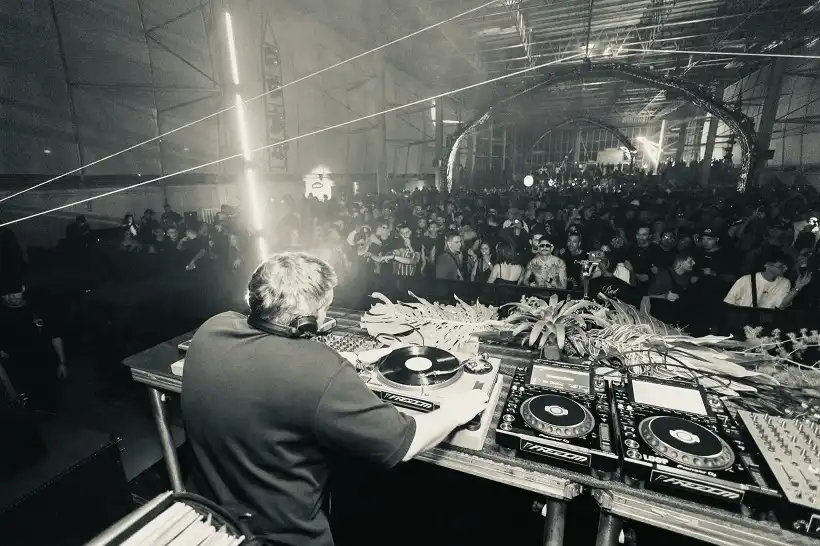
I have a deep attachment to vinyl because, when I started DJing, it was the only option. For me, vinyl embodies the very essence of DJing because you have the physical connection to the track, beatmatching by ear, crate digging, and managing imperfection. However, new technologies like digital and CDJs have enabled more people from the new generation to express themselves, DJ, and make music at a lower cost—since I know the price of vinyl is very high these days and isn’t always an option. The main thing is to choose the format that suits you best and to uphold the values of techno. The format doesn’t matter.
- Much is said about the responsibilities of artists, but what do you believe is the most important legacy of a raver?
Coming from the French rave and free party scene—where I got my start—I grew up with these values of peace, unity, sharing, kindness, and respect for everyone. Ravers need to keep these values. It is the very essence of the movement. It’s also about taking over neglected locations and turning them into spaces of freedom, while preserving them and respecting the environment—whether it’s a club or a warehouse. You have to respect the venue, the people organizing the party, and those around you. A raver leaves behind a legacy based on all these values.
- Capital cities such as Paris, Berlin or Medellín have experienced processes like gentrification, where neighborhoods become increasingly saturated with tourism, often driven by visitors with greater purchasing power than local residents. This can lead to rising living costs and higher prices. While this also brings positive effects, such as investment and urban development, how do you think these dynamics impact the underground music scene?
In major cities, the scene has been heavily impacted by this phenomenon; many clubs have had to close due to high rents, and artists are forced to relocate to distant suburbs—a move that can affect their work. At times, the underground scene becomes trendy, causing it to lose its anti-commercial edge, while rising ticket prices mean that not everyone can participate. It requires constant reinvention and a continuous struggle.
- Your releases are stronger than ever. Looking ahead, what musical projects are you currently working on? And what do you think would be the best advice for staying current while remaining loyal to your sound?
I released an LP this year, as well as an EP and a few tracks on various-artists compilations; I try to work a little every day. If I had any advice to give, it would be to stay patient, remain true to what you love, avoid following trends, and try to find your own sound rather than copying others.
- Could you share a few tools or apps that any music lover should know about for discovering and researching music?
I think Discogs and Bandcamp are the best places to discover new music—and, of course, the record stores near you ☺️
- To end, add a word in front of each concept:
Old School: Authentic
Europe: Diversity
Latin America: Generosity
Emigrant: Courage
Religion: Belief
Ritual: Tradition
Culture: Transmission
Future: Hope
Techno: Hypnotic
Groove: Movement
Mind: Awareness
Spirit: Soul
Interview conducted by Daniel Tamayo Mendoza
Comparte: